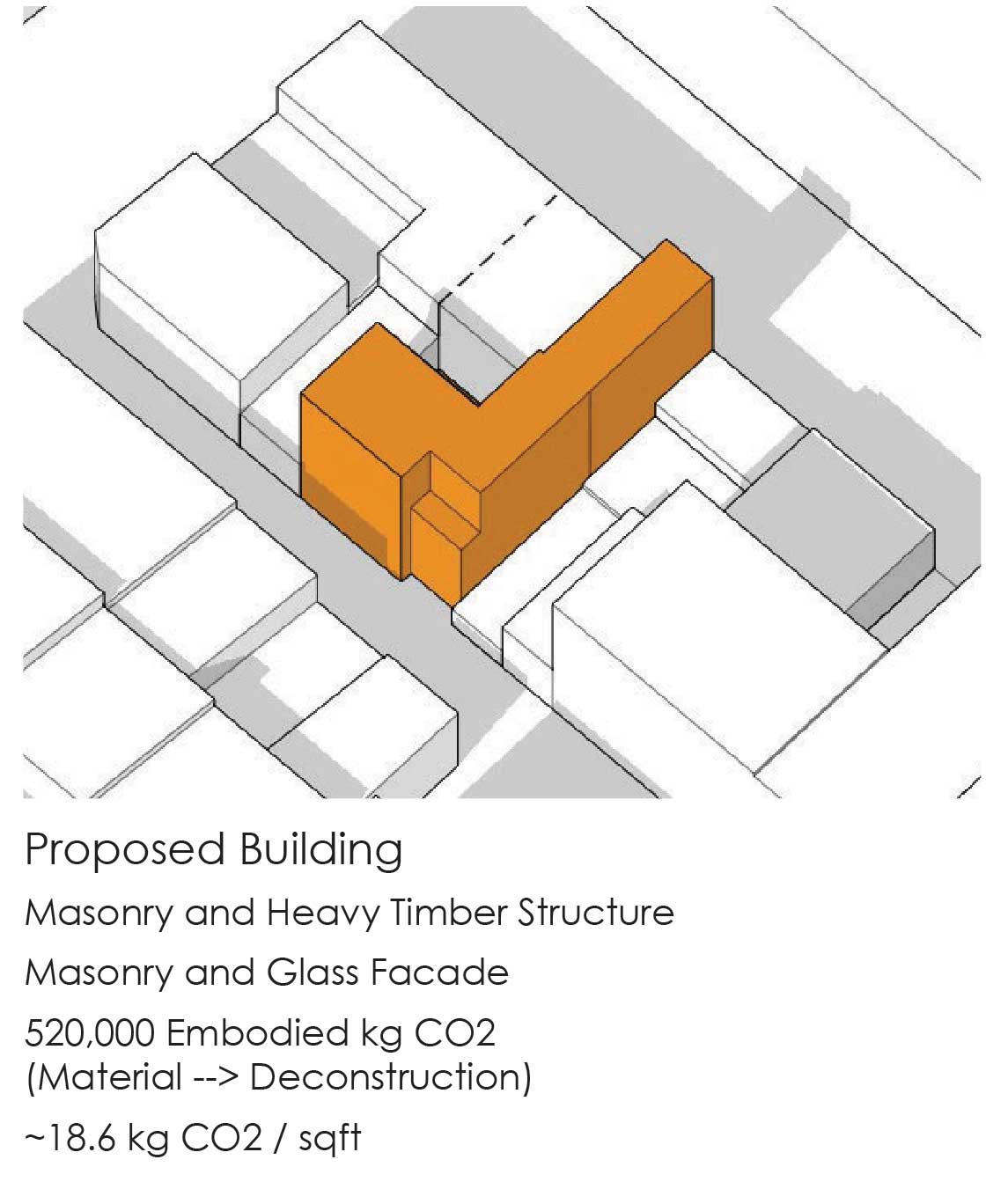
Solid Spaces
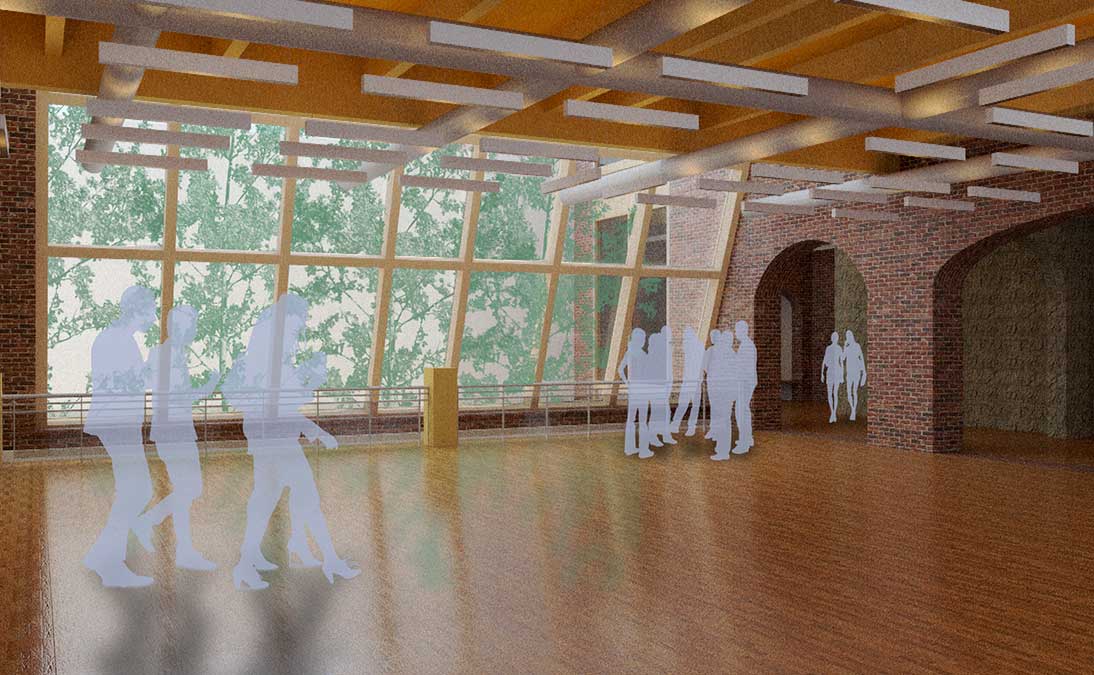
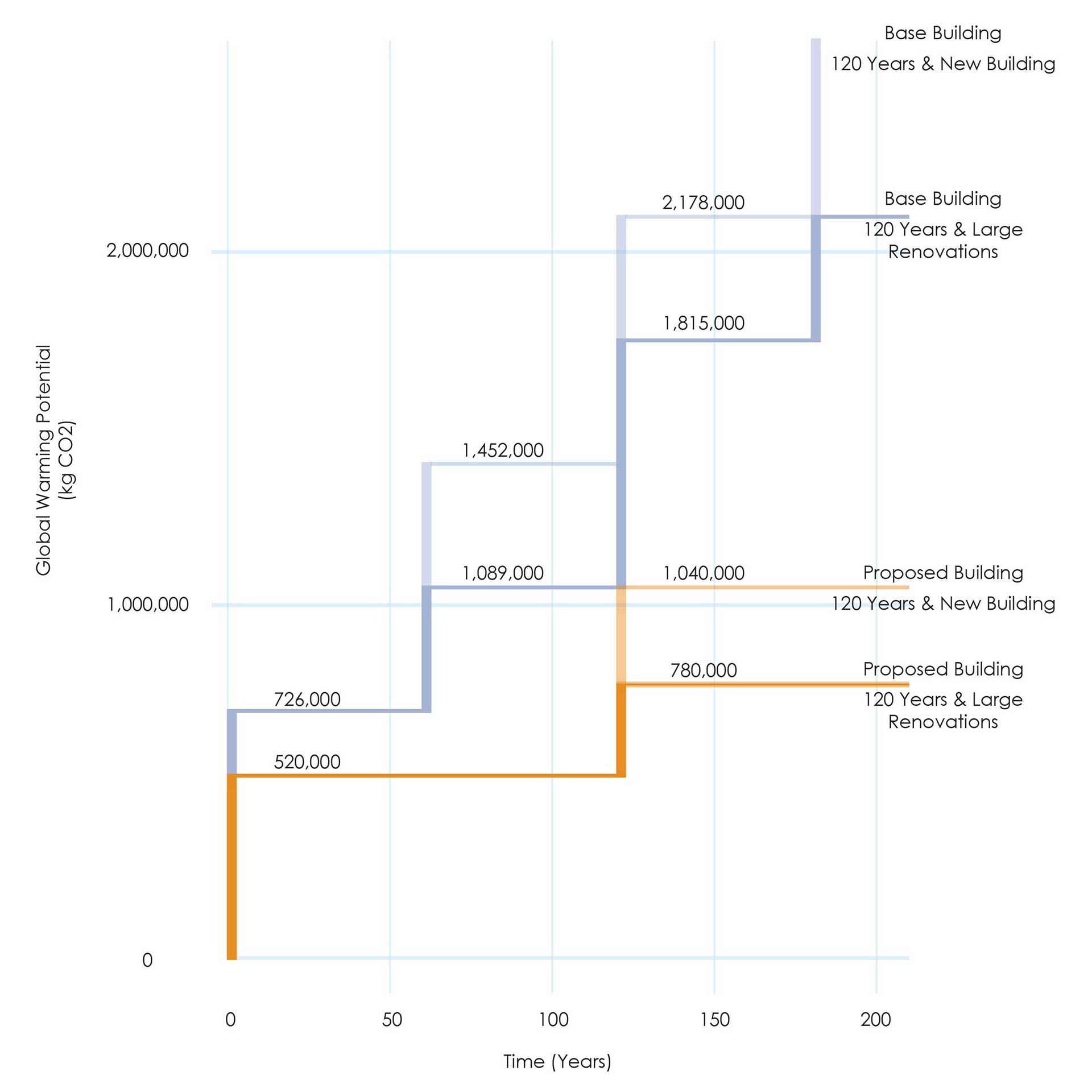
With each passing year we know more and more the risk that our cities and places we inhabit face from effects of global climate change. Sustainability, in its truest sense, is needed in all aspects of our lives and designs. And not just sustainable buildings, but also more importantly sustainable communities. Through this project, the idea of a sustainable community was the driver for the efforts of sustainable design. One of the most import factors of both of these views is that the buildings we design not only last for the first or second occupants, but much longer for one hundred to two hundred years. The project below aims to do just that, be designed around the need to humbly serve the community and the future.
Site and Situation
The site on Friend Street in Bulfinch Triangle was once not land. The creation of this site altered the landscape in unimaginable ways. Once known as Mill Pond, the site used to be a large swath of marshland along a river exiting into the ocean. As colonizers began to settle Boston and cultivate the land the marsh was dammed off from the river, turned into a pond, and then in the 1800’s was filled in to become new land to cultivate life and livelihoods.
Bulfinch Triangle was originally conceived to be a mixed-use neighborhood of businesses and dwellings. Buildings were made of timber and masonry and stayed a relatively average height for the time (3-6 stories), what is now seen as small compared to new developments nearby.
To build in a pre-existing place like Bulfinch Triangle we must find ways to relate to the present. In the materiality and physicality of the building, we must be empathetic to the previous chapters of the site, the neighborhood, and the city. It is demanded of us to find ground and be grounded, for the buildings we build are merely a small piece in the bigger composition and are only fully achieved once they are inhabited, used, and evolved.
Through taking cues from the neighborhood a design can be grounded in the neighborhood’s metaphysical nature through physical elements or strategies. A building in this area also needs to ground itself physically into the ground.
To physically ground a building here, the foundation of the building must transcend almost as far down as it rises above the ground. To reach solid and stable enough ground a building’s foundation must reach down to about 70 feet where it will sit on what is known as Argillite. The purpose to extend the building this far is to find ground that is stable but that can withstand the weight of the building that will sit on the land.


To Give Structure
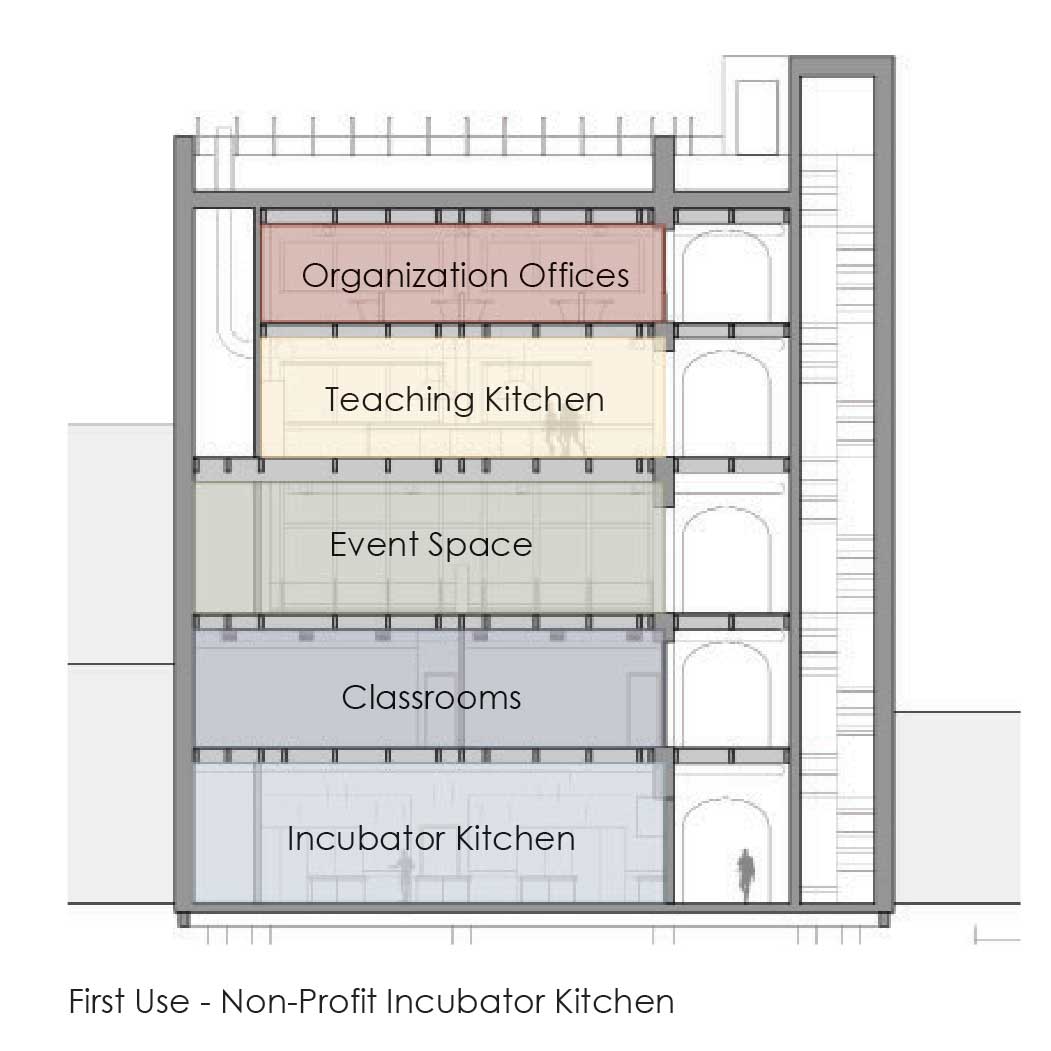
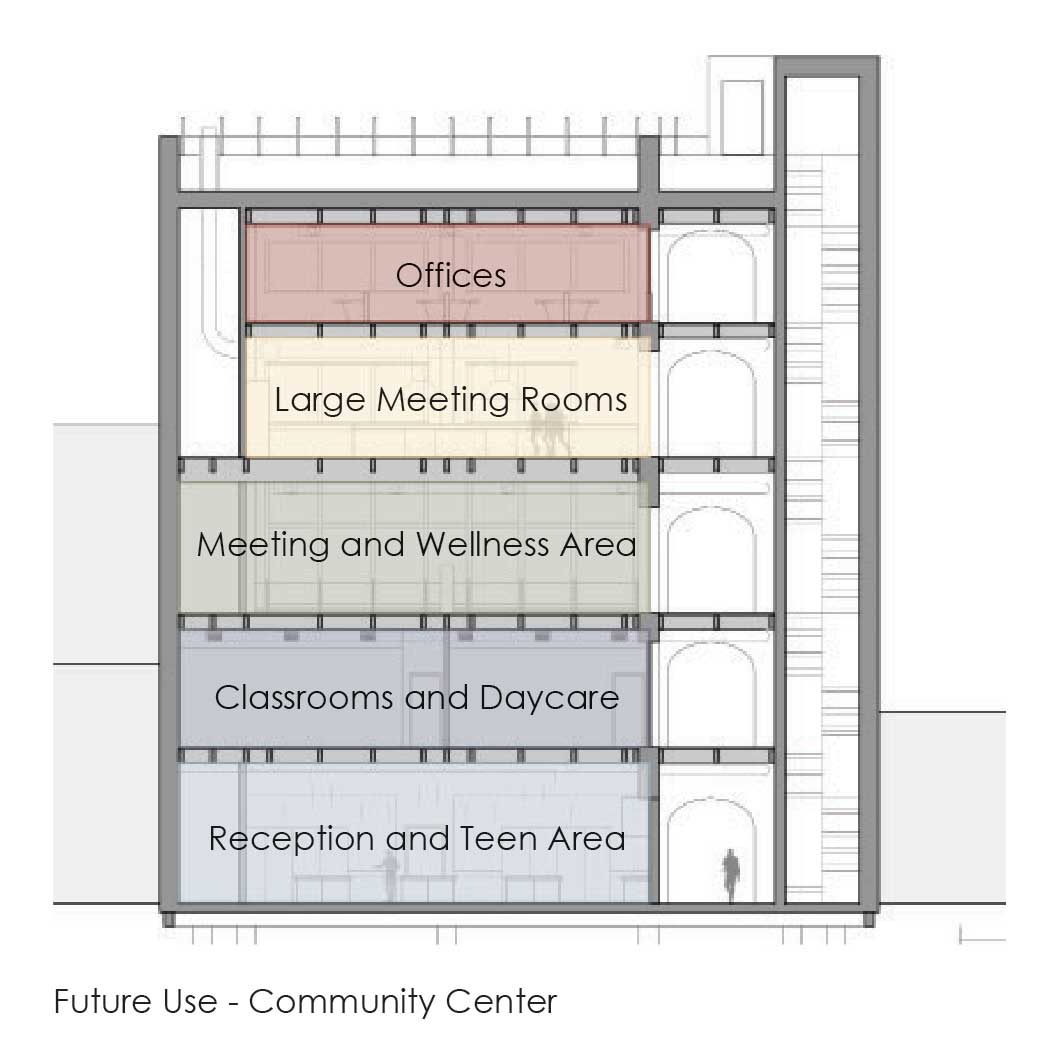
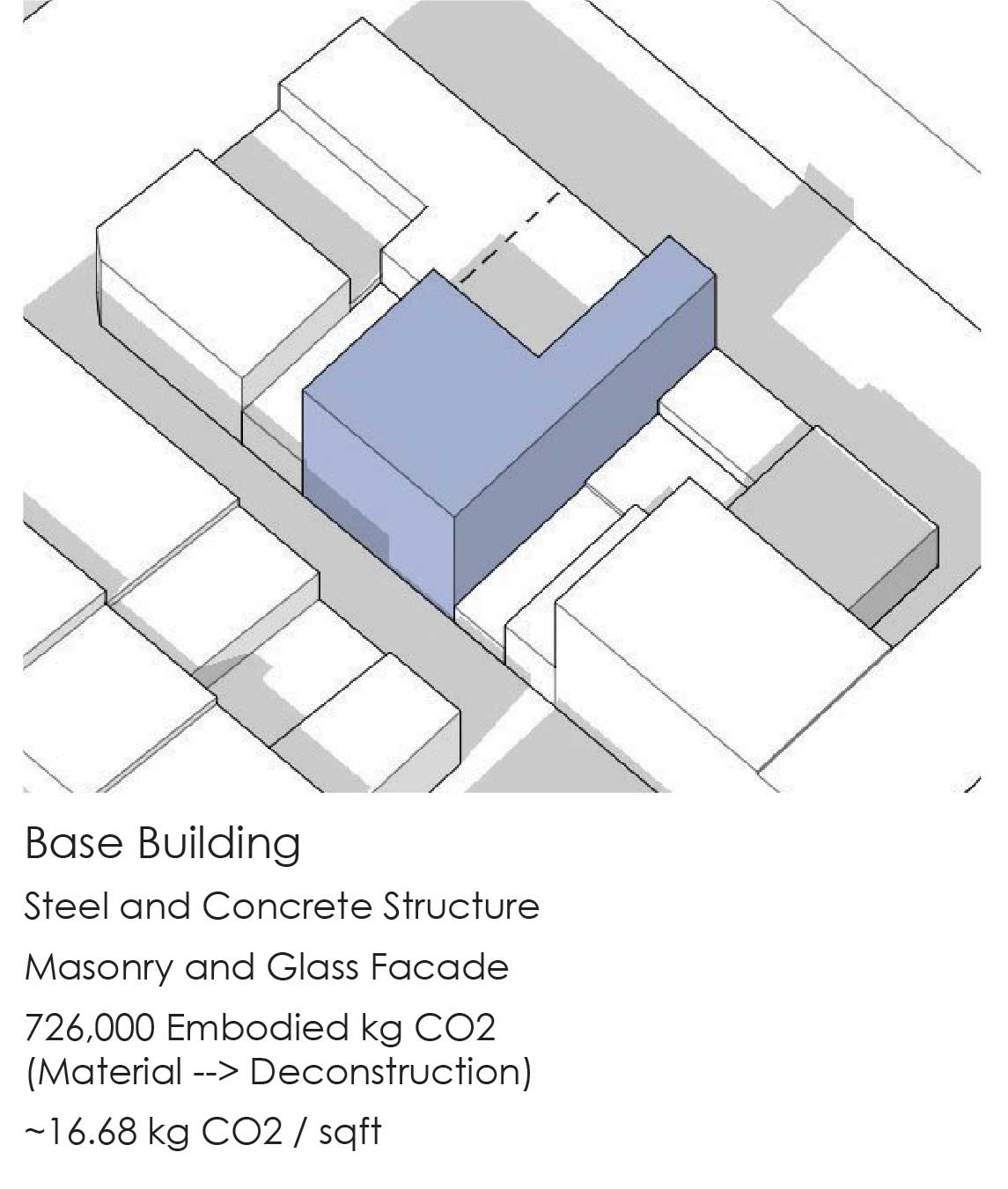
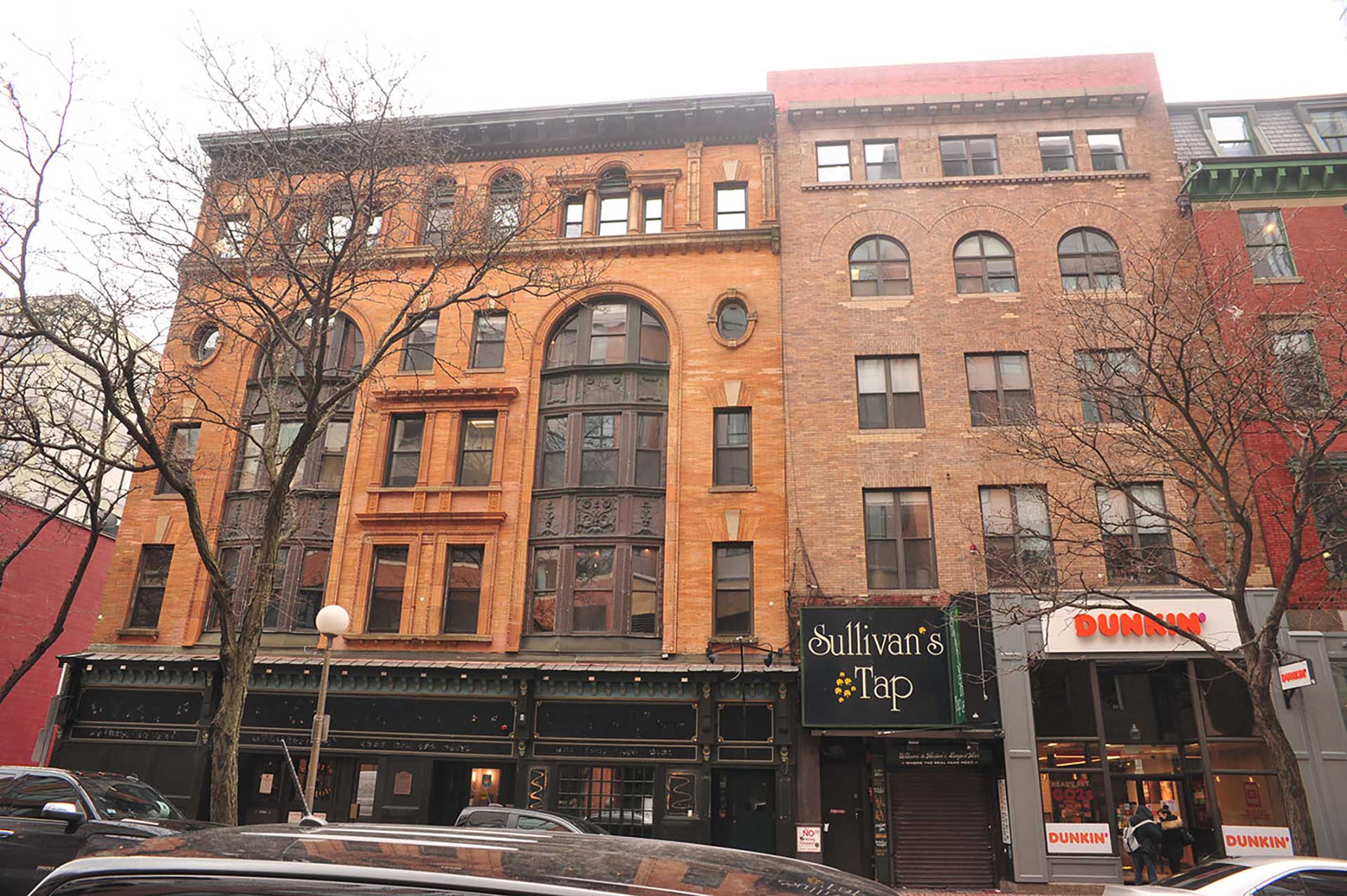
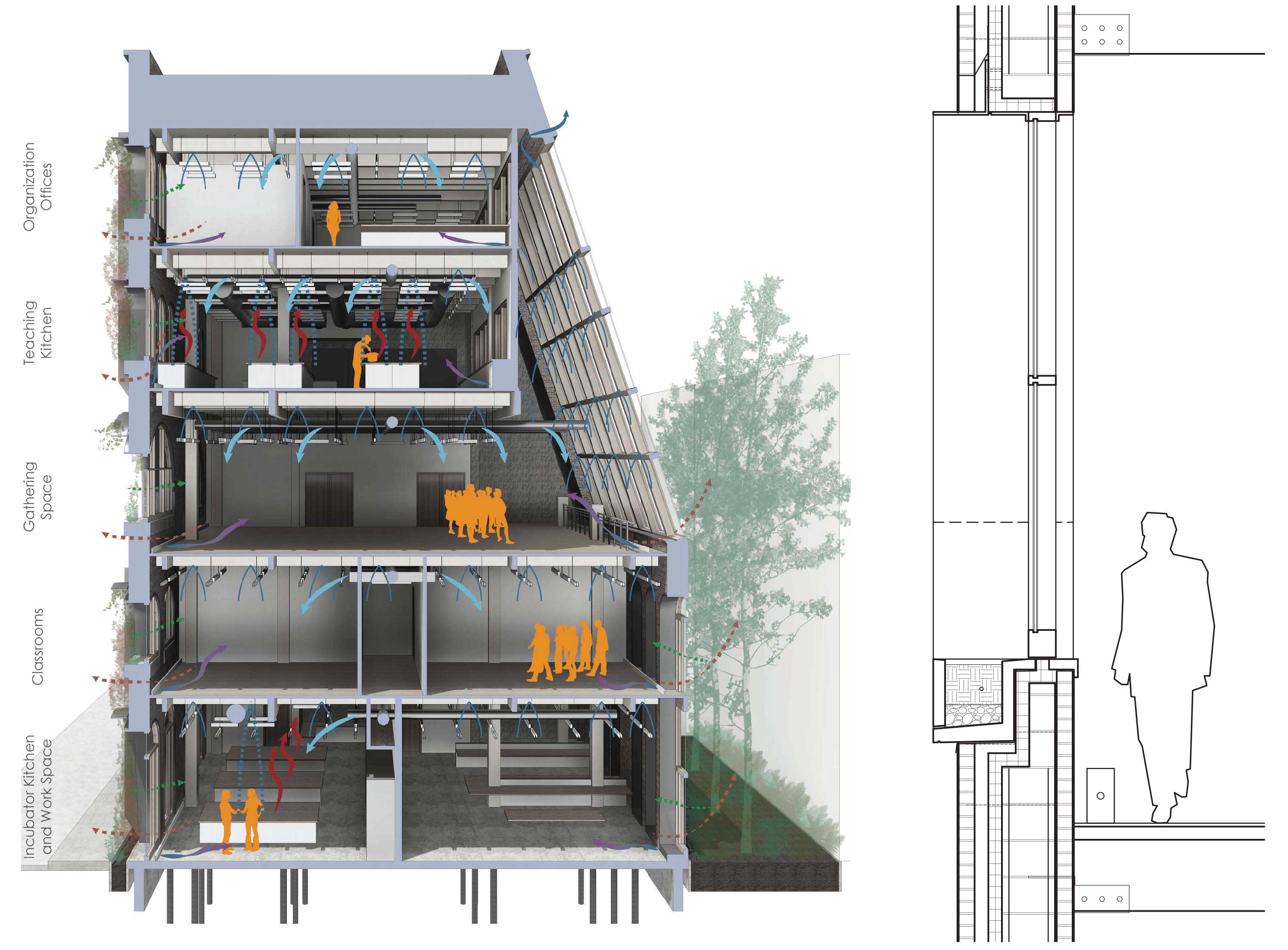
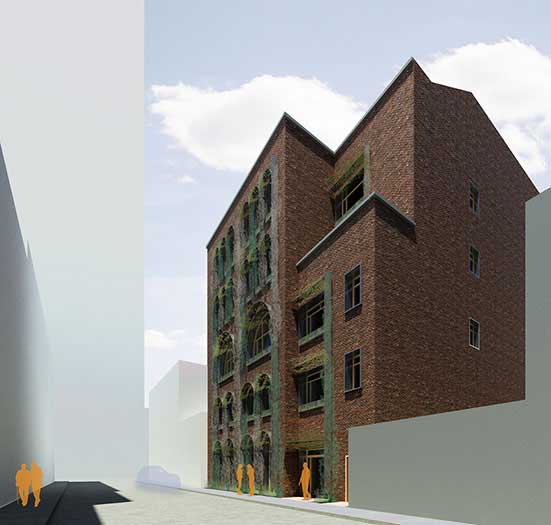
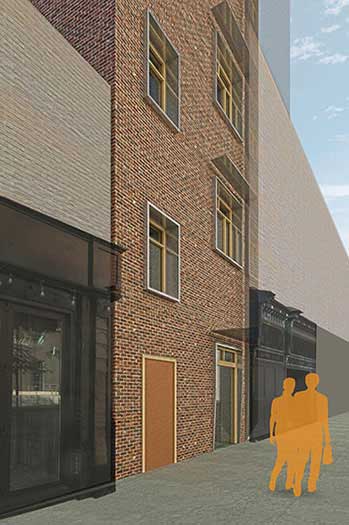
The design of the building took inspiration and root with the knowledge that on this site once stood three separate buildings. In an effort to tap into the existing fabric of the neighborhood the building’s mass was broken up into parts in order to unearth the history of the site, engaging in an empathetic palimpsest. The past also makes itself present in the materiality of the building, brick exterior and a heavy timber interior structure. Through a desire to connect the two streets, a service corridor presented itself as a way to free up programmed space. Circulation, mechanical systems, restrooms, etc. are all located within this corridor to allow for freedom of space and change within the larger programmed space volume. By organizing the different uses of the building in a vertical fashion, rather than a horizontal, each floor could be designed to accommodate a multitude of uses throughout time.

To Give Face
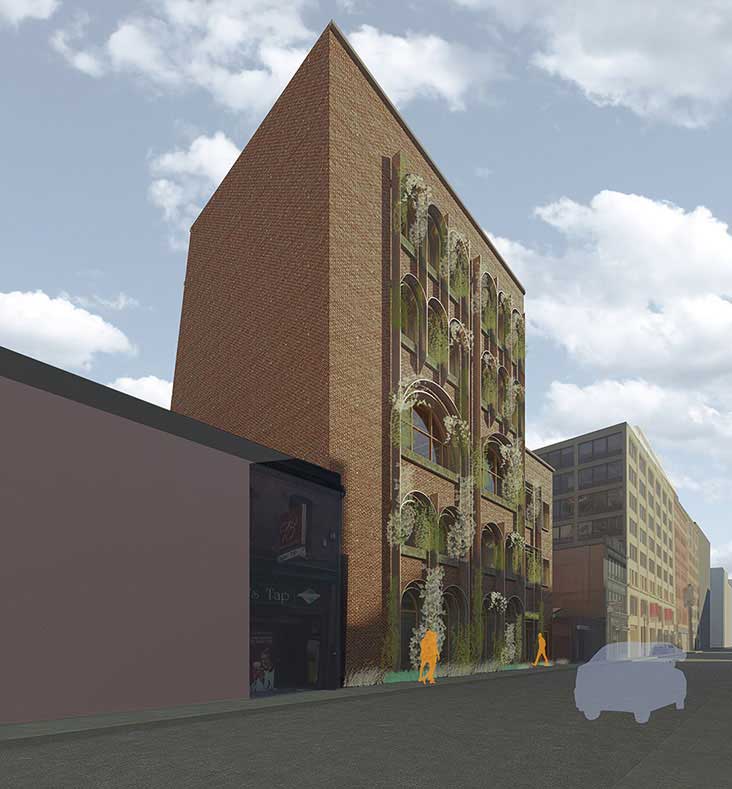
The designs of the windows were thoughtfully decided based off of each floor’s possible use and amount of openness to the public. Larger windows on the ground floor and the event space on the third floor are designed to prioritize both the users on the inside and the possible users on the outside.
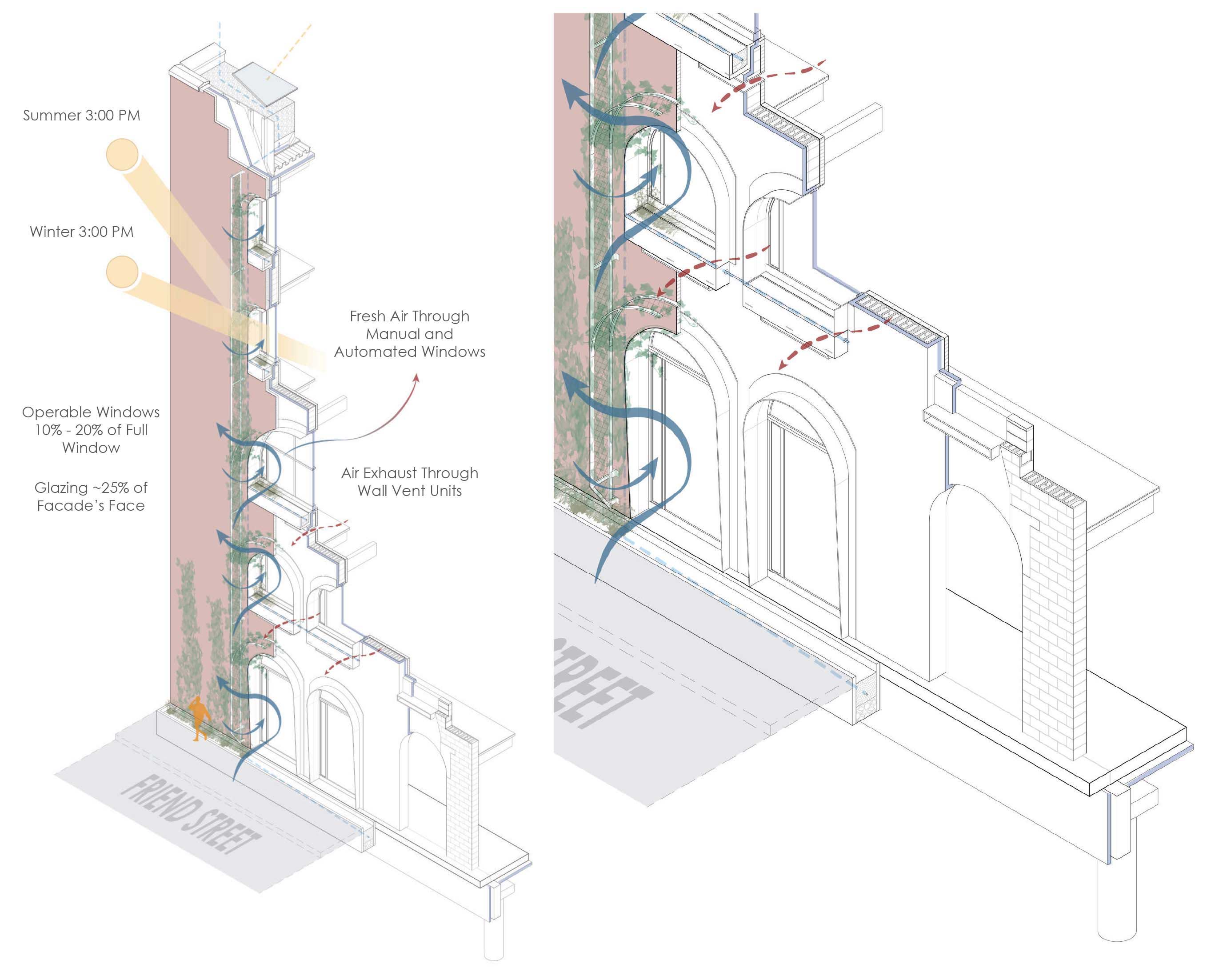
Through a combination of utilizing the thick wall assembly and a vertical vegetated fin system, the building is protected from summer afternoon sun and solar radiation, while allowing for winter afternoon solar radiation and sun to enter. When the weather gets colder, the Virginia Creeper vine loses its leaves and allows from sun to enter through the wire net that the vine uses as structure. The angle of the sun is also low enough to pass the overhang of the wall and enter the space. This is implemented for visual and thermal comfort throughout the year.
To Give Space
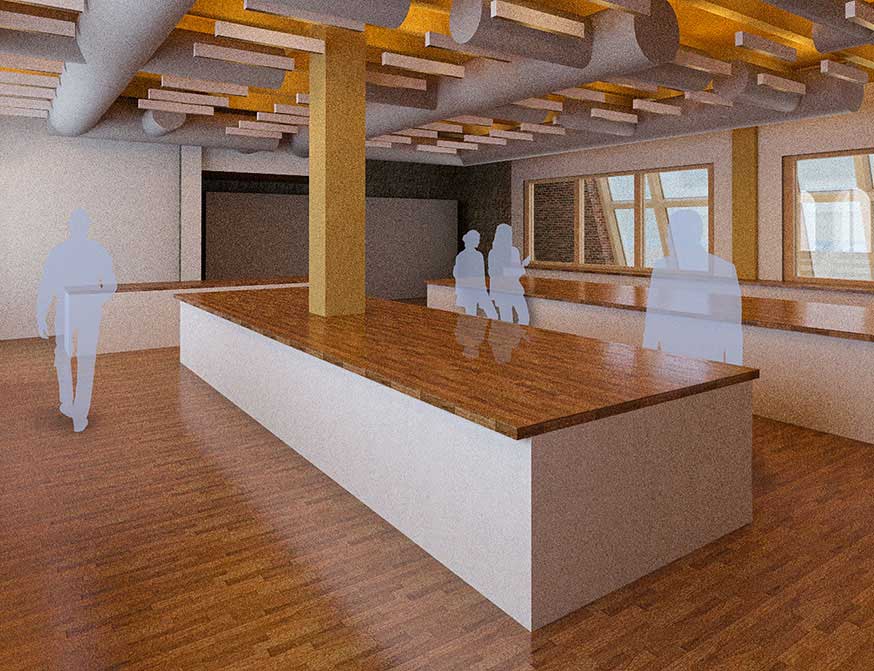
The success of the interior spaces is reliant on the comfort in visual and non-visual senses. Through a balanced system of a central fresh air system, localized exhaust vents, hydronic convectors, and operable windows the interiors spaces are not burdened with large and noisy ducts and able to be individually adjusted to the occupants’ desires. Also, through a computer-based learning system, occupants can adjust the area’s conditioning while the computer system works to keep enough fresh air coming in and old stale air leaving. By localizing many of the space conditioning systems and outputs there are great opportunities for individuals to have control of their space while not affecting others.
Final Design


Towards the Future
Because of the need for buildings to last longer, serve more people, and to be more easily adaptable there is an expectation now, when designing a building like the one proposed, that there will be other future users that are not yet known. As empathetic as the design is for the present when it is designed, it can only do its best in being sympathetic to a future not yet known. The following diagrams show the possibility for this proposed building to be used in a multitude of ways over its proposed lifespan. Where the program might change over time, the uses and types of uses remain constant.