Purposeful Promontories
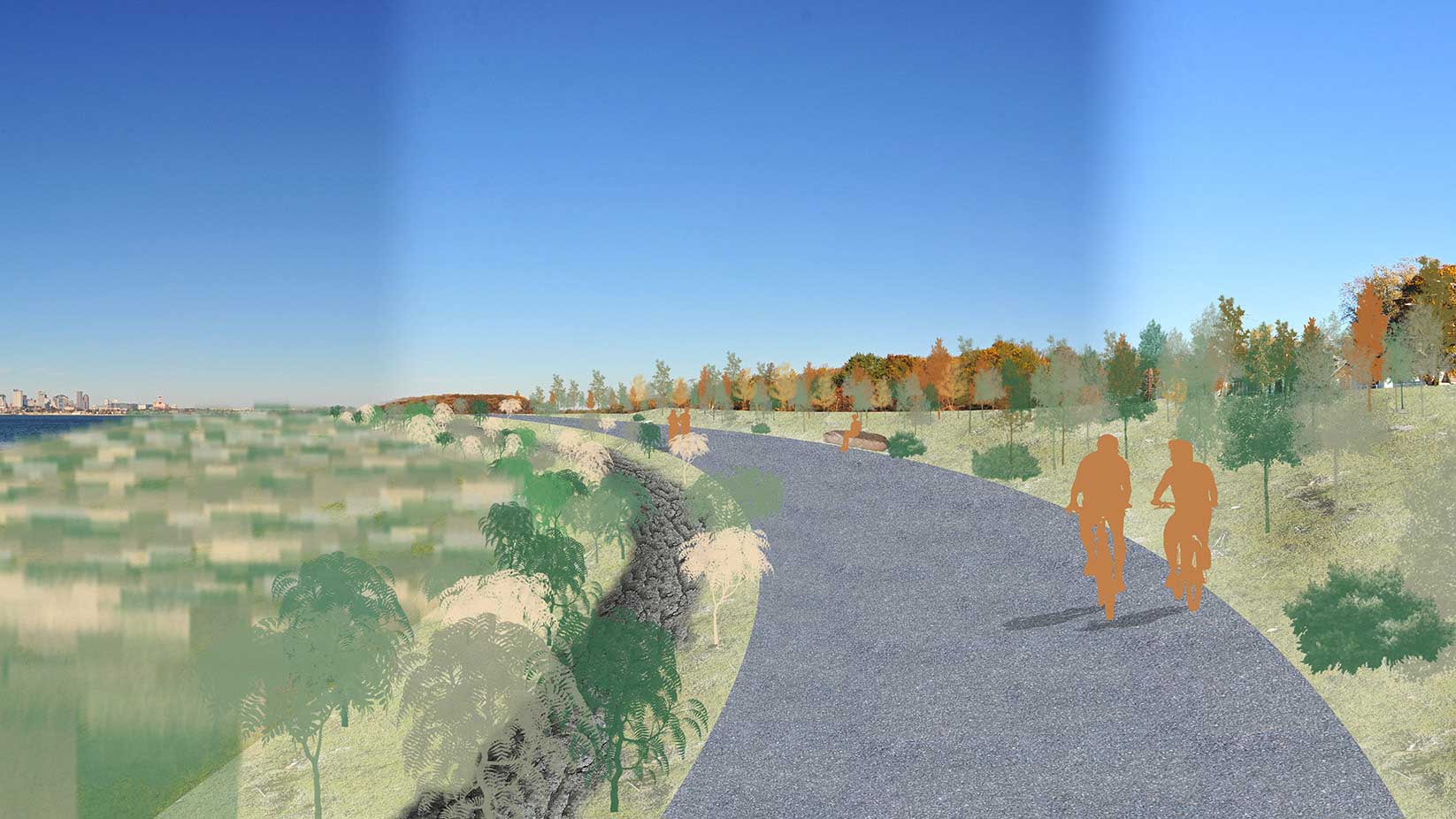
Climate change is an undeniable fact of our present and future political, economical, and environmental landscape. Every single part of our lives will be impacted becuase of the effects of global warming and climate change. It is up to us as designers to do all we can in the built environment to make sure that that future is as least devastating as possible to those we design for and more. The thing that I think a lot of people don't realize is how critical landscapes and transitional spaces in those landscapes are. Marshlands specifically have huge benefits to protecting many of our country's water-based metropolises. Marshlands can help slow and mitigate floods, storm surgeres, and water runoff however they need the space to grow and flourish and adapt with the changes climate.
Boston, like many of America's cities, was built on filled in marshland. My design for the Neponset Coastal Reclamation Park looks to used land reclaimed from people displaced from sea level rise with marshland and forested areas. Through extensive research into the historic land masses of the harbor, the current populations of the area, and projections of change in water levels and locations I was able to determine a park boundary that is just and provides resources for the local communities. The most important consideration when designing the park was to ensure its longevity and ability to allow for natural changes to occur in the ecology of the park as the sea level changes too. This is achieved by using reclaimed ruble and large rocks from construction as a sub-grade revetment structure and multi-tiered hummock inspired land masses that will become islands as the sea level rises in the future.
Neponset Coastal Reclamation Park Design and Time
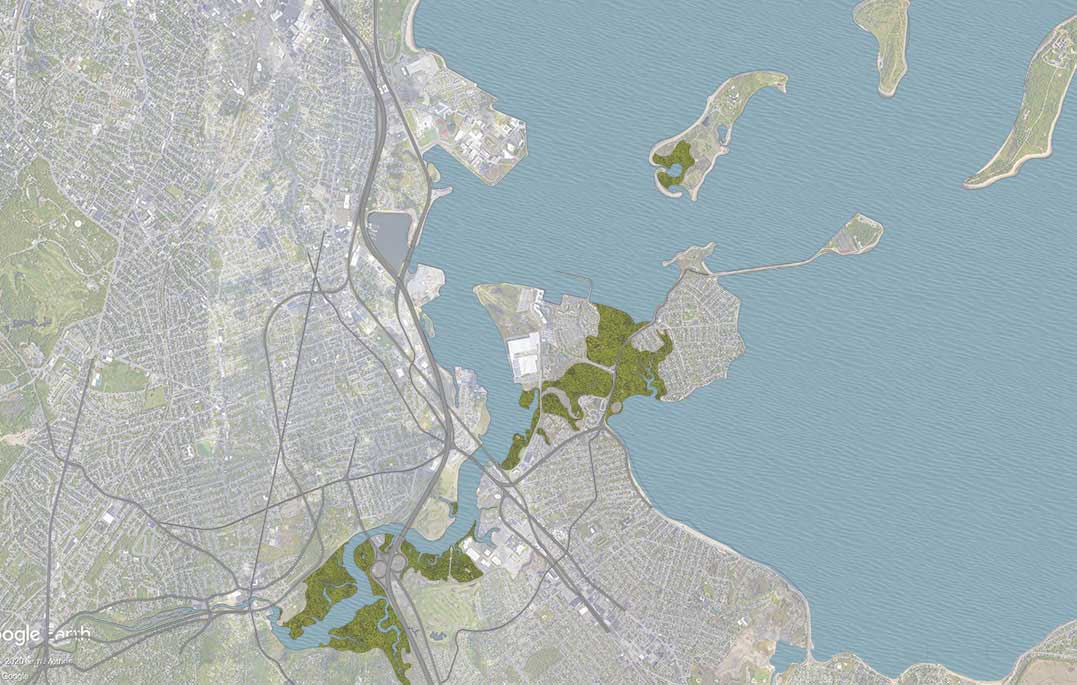
2020

2050 (+6 feet)
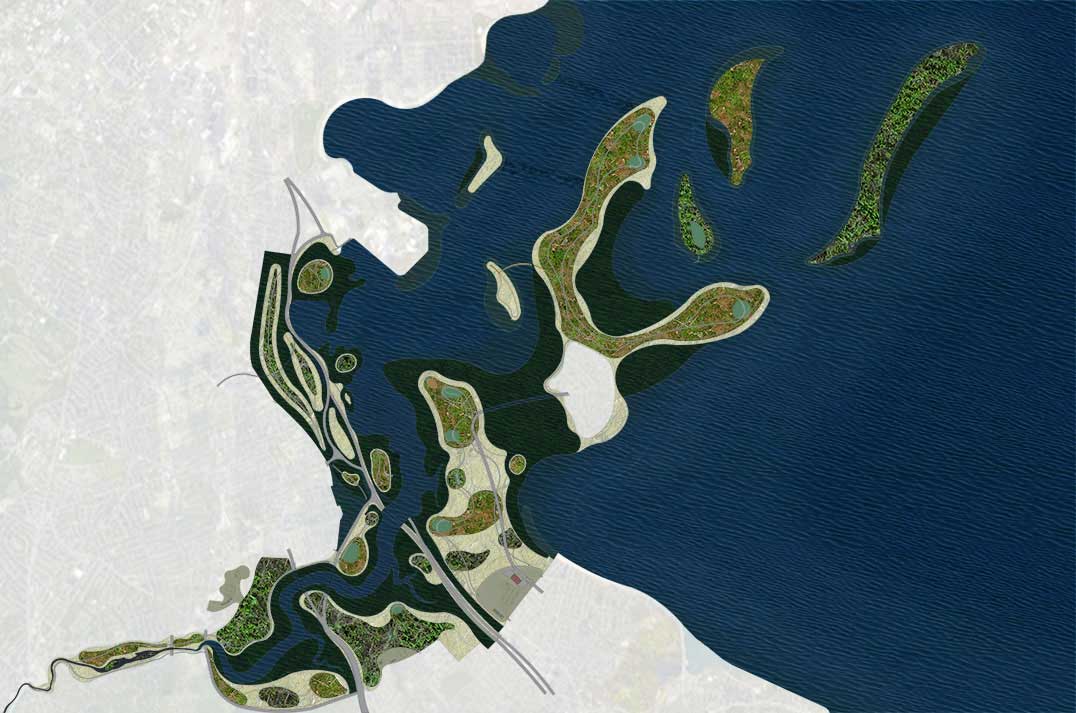
2050 (+6 feet and storm surge)
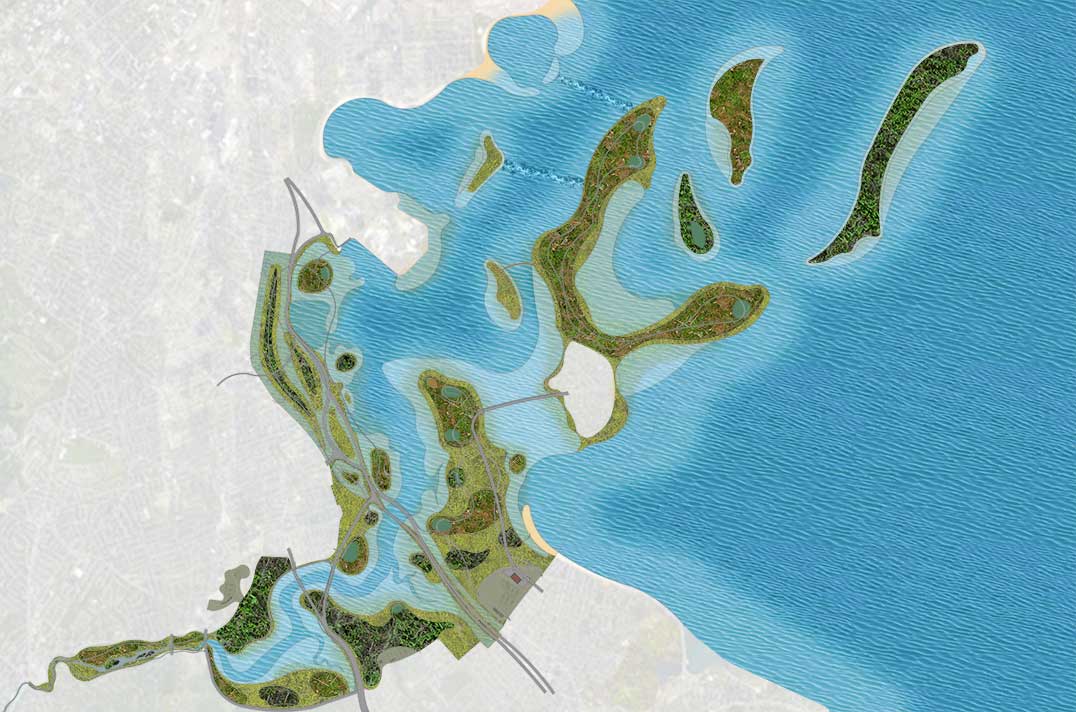
2050 (+12 feet)


President Golf Course (seen from Pope John Paul II Park)
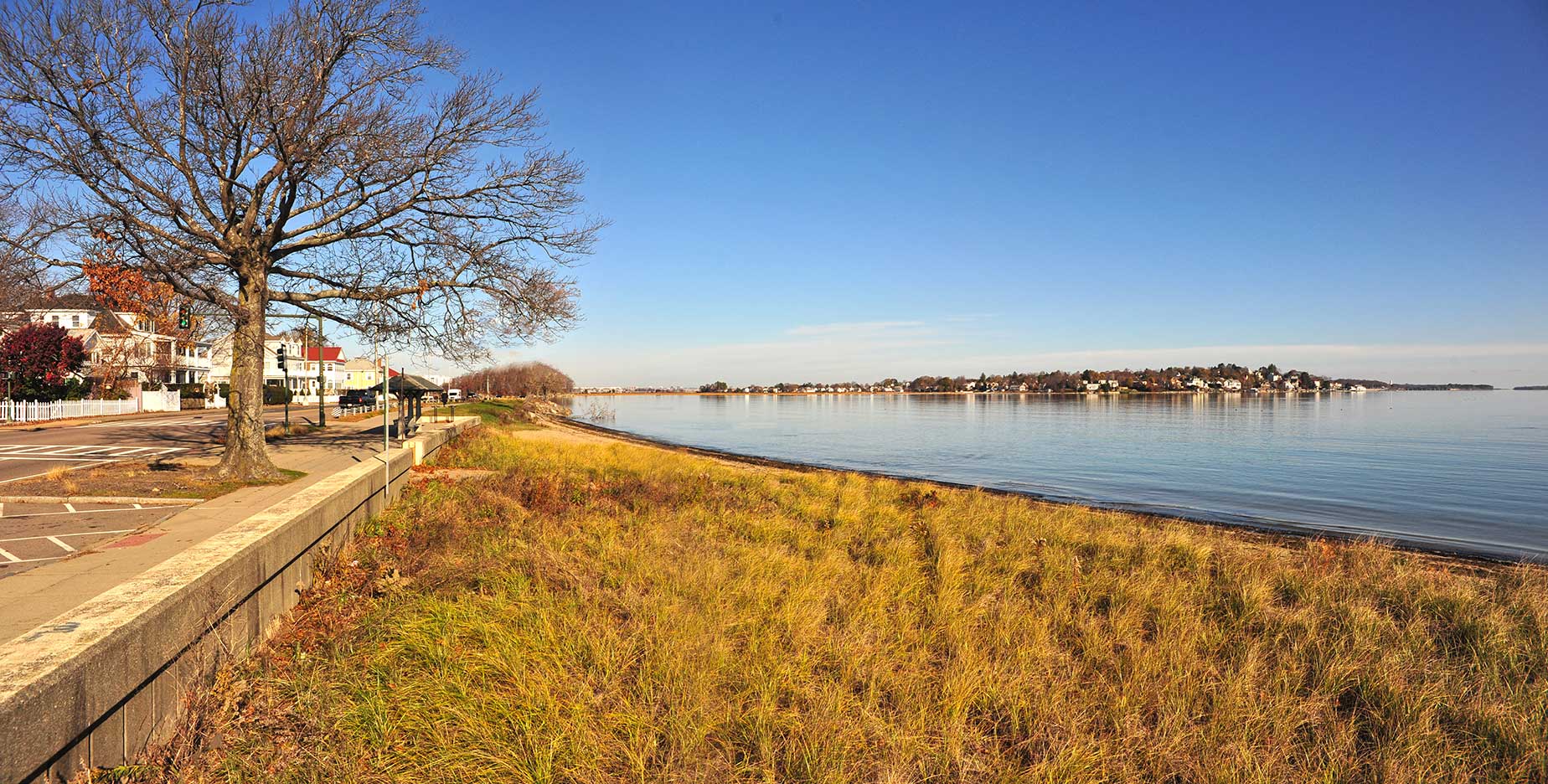

Quincy Shore Drive


Neponset Landing
Resident Resettlement Plan
One of the biggest struggles I had with this project was the thought of having to removing around 20,000 residents because of the planning and design of the park. However, a reframing of the idea from removing to relocating began to shift my approach to the design. With or without the Newponset Coastal Reclamation Park, these residents would more than likely find themselves as climate refugees within the next 30 years as sea level rises and the sea walls being implemented now don’t work. If we can plan early enough the residents of these communities to reestablish themselves in similar community conditions with similar or better access to resources and infrastructure. By utilizing just 3 golf courses in the Boston Metro Area, enough land could be repurposed to businesses and housing and built just ahead of as needed as residents are pushed out of their homes every year with high sea level and increases in storms all resulting in damaging flooding. By finding a place for these residents now, they’ll have a place to go in the near future. This lesson of long term future planning in this small area of the Boston Metro Area shows the need for long term planning of a similar kind for all of Boston and all of the major urban areas on our country’s coastal waters.
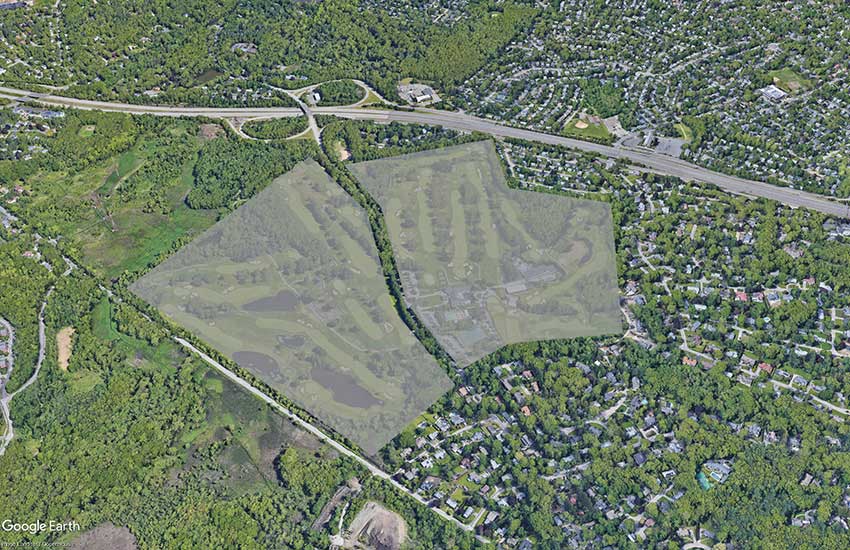

Belmont Country Club
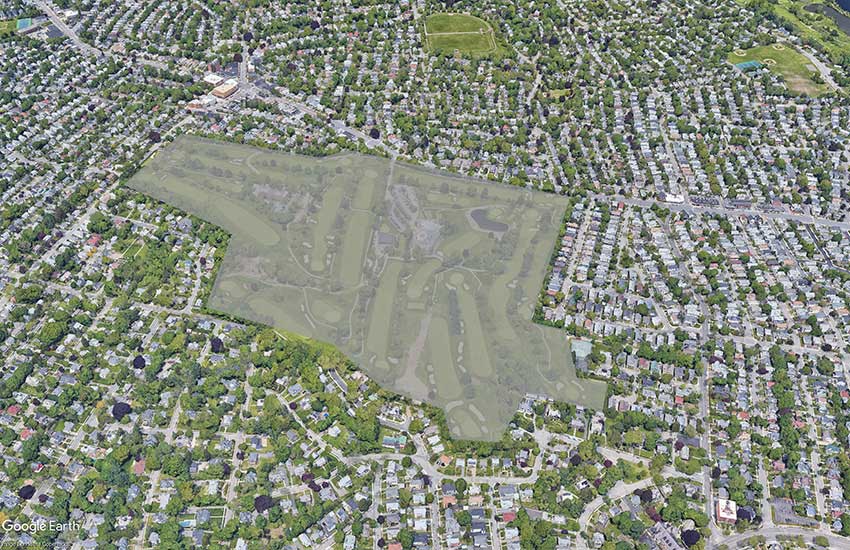
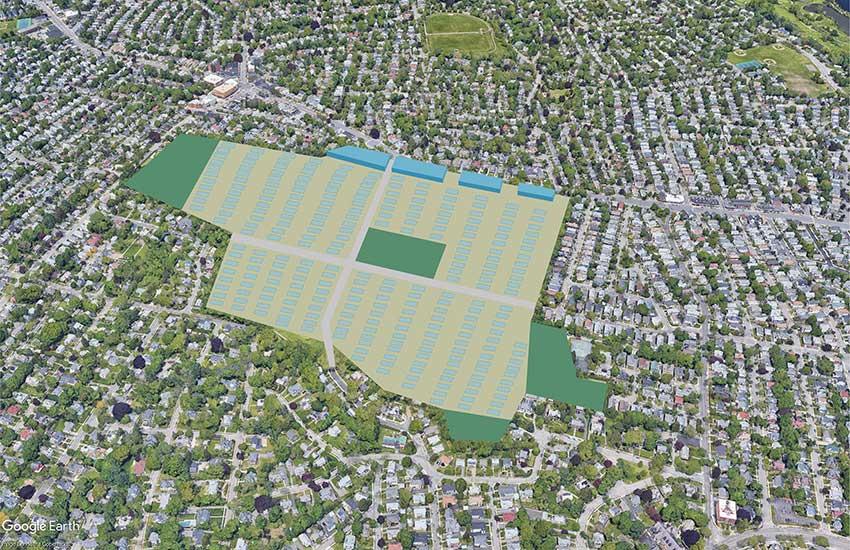
Oakley Country Club

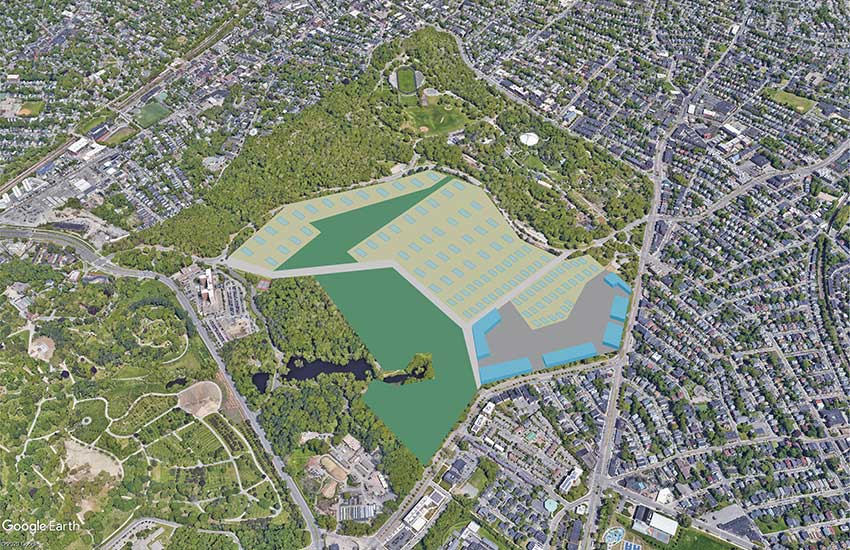
William J Devine Golf Course
Coastal Reclamation Strategy Applied At Large


Boston, MA

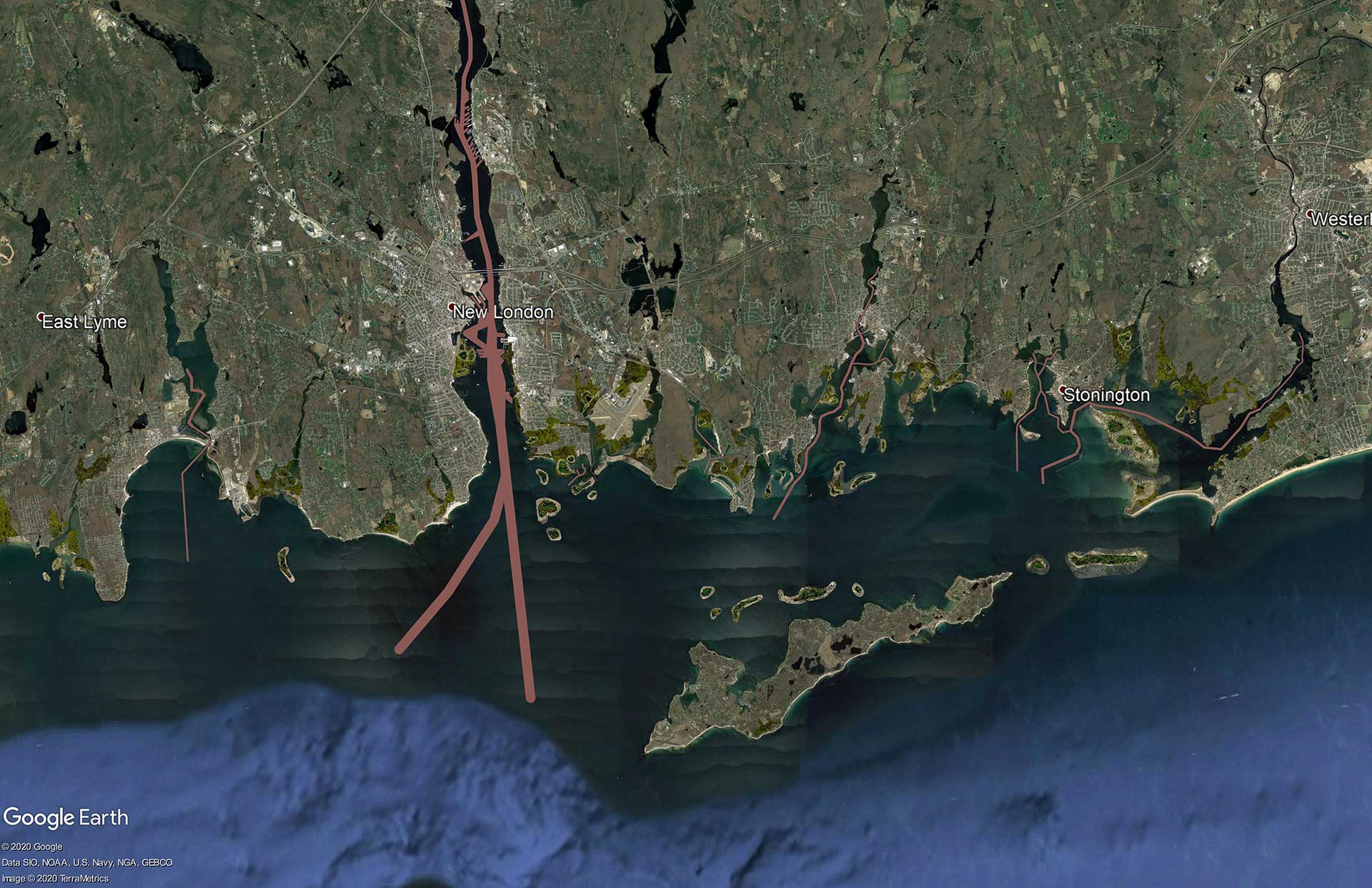
New London, CT
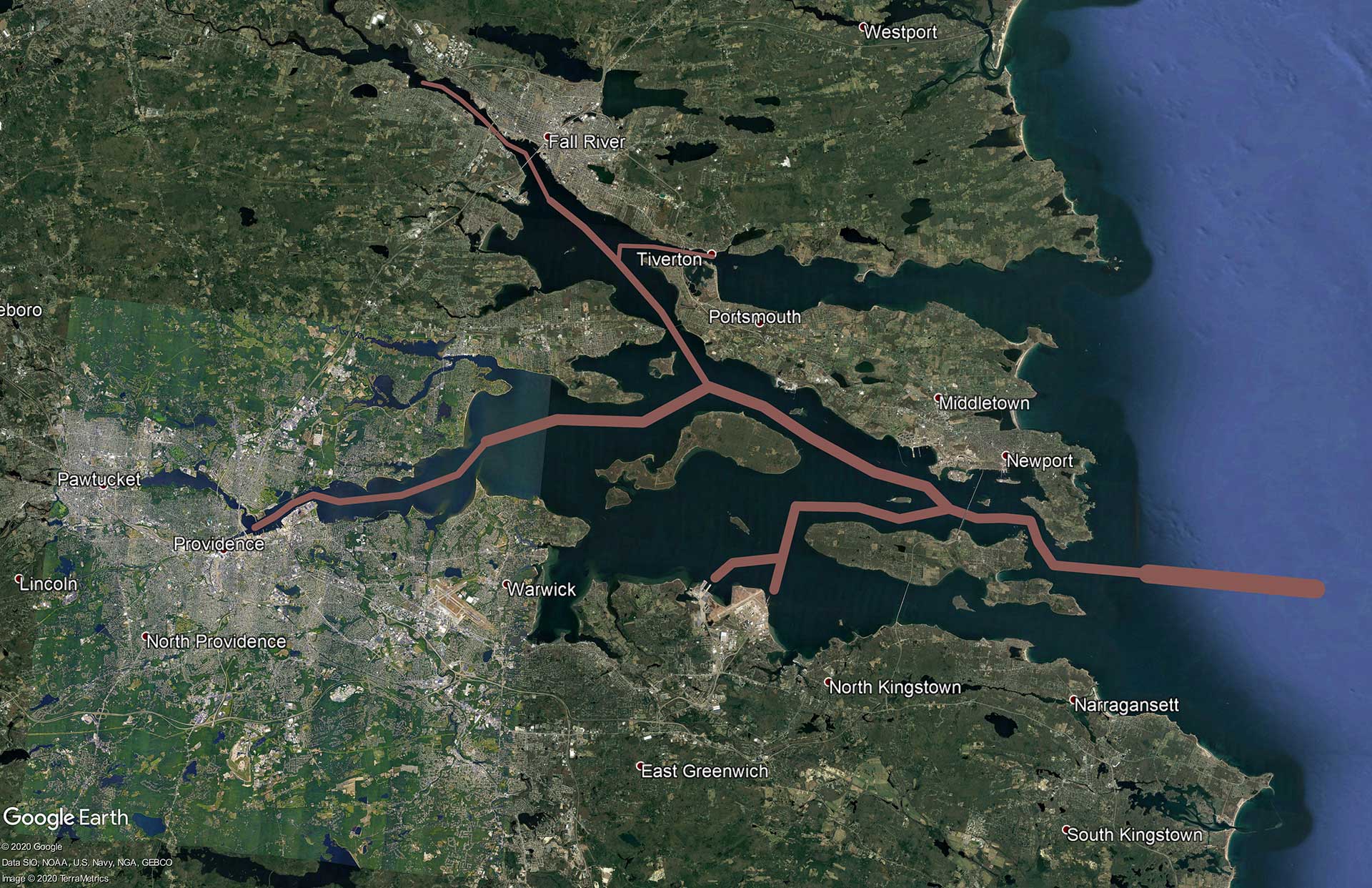

Rhode Island


Portsmouth, NH